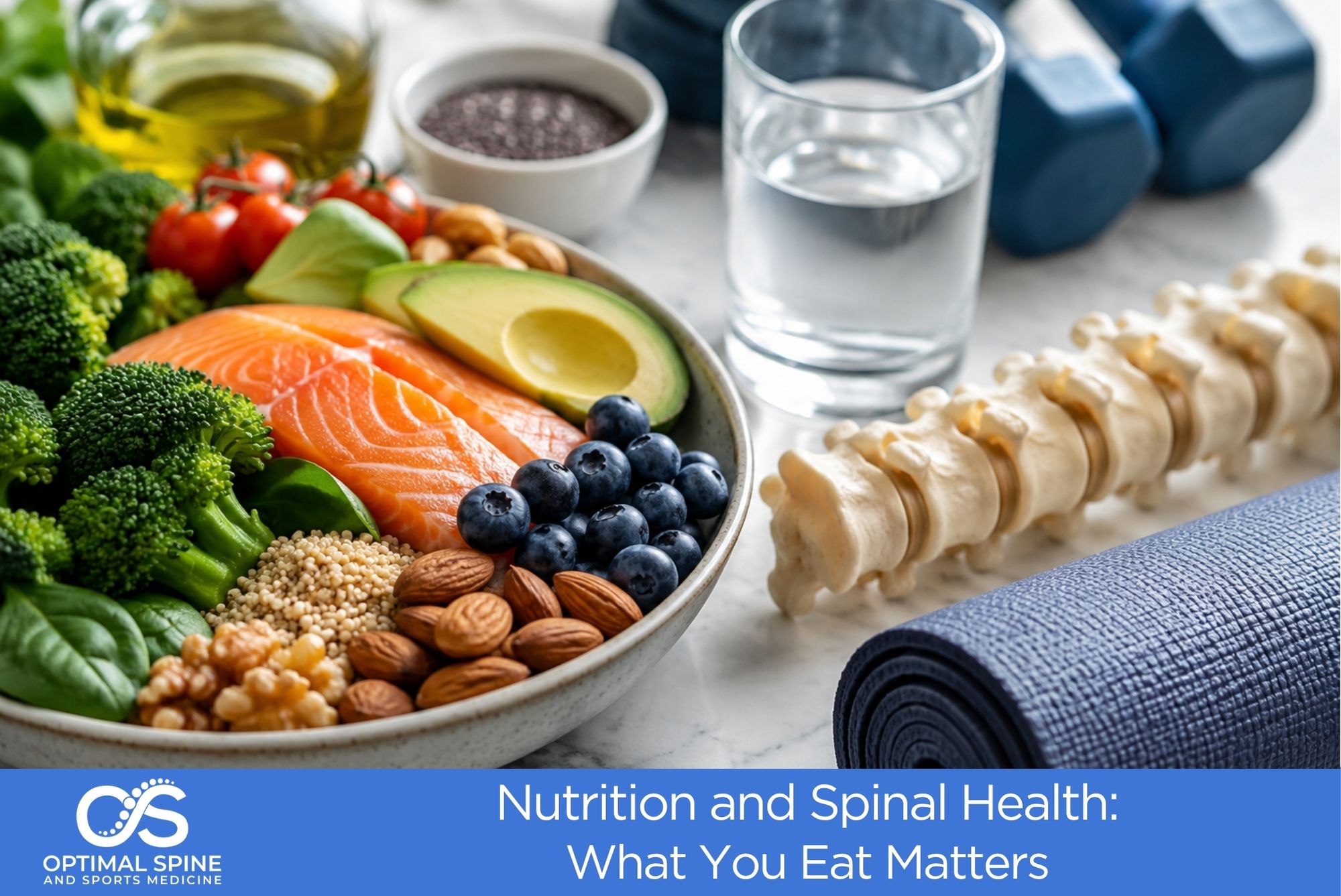
Back pain, spinal injuries, inflammation, and chronic discomfort can significantly affect your daily life. While many people focus on physical therapy, chiropractic care, and exercise to improve spinal health, nutrition is often overlooked. The truth is that what you eat plays a major role in how your body heals, manages inflammation, and supports spinal function.
At Optimal Spine And Sports Medicine, we believe in a comprehensive approach to wellness that includes proper nutrition alongside advanced spinal and sports medicine treatments. By making smart dietary choices, staying hydrated, and supporting your body with key nutrients, you can help reduce inflammation, promote healing, and improve overall spinal health.
How Nutrition Affects Spinal Health
Your spine is made up of bones, discs, muscles, ligaments, nerves, and connective tissues that all rely on proper nutrients to function effectively. Poor nutrition can contribute to inflammation, weakened bones, muscle fatigue, and slower healing times. Conversely, a healthy diet can support:
- Reduced inflammation
- Stronger bones and joints
- Improved muscle function
- Better circulation
- Faster recovery from injuries
- Reduced chronic pain
Inflammation is one of the leading contributors to spinal pain and discomfort. Conditions such as arthritis, herniated discs, sciatica, and chronic back pain can all worsen when inflammation levels remain high in the body.
The Benefits of an Anti-Inflammatory Diet
An anti-inflammatory diet focuses on nutrient-rich foods that help the body reduce inflammation naturally. Incorporating these foods into your daily meals may improve spinal health and overall wellness.
Foods That Help Reduce Inflammation
Fatty Fish
Salmon, tuna, sardines, and mackerel are rich in omega-3 fatty acids, which are known to reduce inflammation and support joint health.
Leafy Green Vegetables
Spinach, kale, broccoli, and collard greens provide antioxidants, calcium, and vitamins that help strengthen bones and reduce oxidative stress.
Berries
Blueberries, strawberries, raspberries, and blackberries contain antioxidants that help fight inflammation and support tissue repair.
Nuts and Seeds
Almonds, walnuts, flaxseeds, and chia seeds provide healthy fats, magnesium, and protein that support muscle and nerve health.
Whole Grains
Brown rice, quinoa, oats, and whole wheat products help regulate blood sugar and reduce inflammatory responses.
Healthy Oils
Olive oil and avocado oil contain healthy fats that support cardiovascular health and reduce inflammation throughout the body.
Foods That May Increase Inflammation
Limiting certain foods can also benefit spinal health. Highly processed foods, sugary beverages, fried foods, and excessive alcohol may contribute to inflammation and worsen chronic pain symptoms.
Common inflammatory foods include:
- Processed snacks
- Sugary desserts
- Fast food
- Refined carbohydrates
- Processed meats
- Excessive soda consumption
Reducing these foods can help improve energy levels and support healing.
Hydration and Spinal Health
Many people do not realize how important hydration is for spinal function. The discs between your vertebrae rely heavily on water to maintain flexibility and absorb shock. Dehydration can contribute to disc degeneration, stiffness, and increased discomfort.
Why Staying Hydrated Matters
Proper hydration helps:
- Maintain spinal disc health
- Improve nutrient delivery to tissues
- Support muscle function
- Reduce muscle cramps and stiffness
- Promote joint lubrication
- Assist in recovery after physical activity
Tips for Better Hydration
- Drink water consistently throughout the day
- Limit excessive caffeine and sugary drinks
- Increase water intake during exercise
- Eat water-rich foods like cucumbers, watermelon, and oranges
Most adults should aim for adequate daily water intake based on activity level, climate, and overall health.
Supplements That May Support Spinal Healing
While a healthy diet should always be the foundation, certain supplements may support recovery and spinal wellness when recommended by a healthcare provider.
Vitamin D
Vitamin D supports calcium absorption and bone strength. Low vitamin D levels may contribute to bone weakness and musculoskeletal pain.
Calcium
Calcium is essential for maintaining strong bones and preventing degeneration over time.
Magnesium
Magnesium supports muscle relaxation, nerve function, and helps reduce muscle tension and spasms.
Omega-3 Fatty Acids
Fish oil supplements may help reduce inflammation and support joint mobility.
Collagen
Collagen supplements may support connective tissue health, including ligaments and cartilage.
Turmeric and Curcumin
Turmeric contains curcumin, a natural anti-inflammatory compound that may help reduce pain and swelling.
Before beginning any supplement regimen, consult with a healthcare professional to ensure safety and proper dosing.
Lifestyle Habits That Complement Good Nutrition
Nutrition works best when combined with healthy lifestyle habits that support spinal wellness.
Exercise Regularly
Low-impact exercises such as walking, swimming, stretching, and yoga can strengthen muscles that support the spine.
Maintain Proper Posture
Good posture reduces unnecessary strain on the spine and muscles.
Get Adequate Sleep
Sleep is essential for tissue repair and recovery.
Manage Stress
Chronic stress can increase inflammation and muscle tension. Meditation, breathing exercises, and regular physical activity may help.
When to Seek Professional Help
If you are experiencing chronic back pain, sports injuries, neck discomfort, or limited mobility, professional evaluation is important. Nutrition can support healing, but addressing underlying spinal conditions requires comprehensive medical care.
At Optimal Spine And Sports Medicine, our team provides personalized treatment plans focused on helping patients recover, improve mobility, and live healthier lives.
Comprehensive Q&A Section
Can nutrition really affect back pain?
Yes. Certain foods can increase inflammation while others help reduce it. A healthy diet rich in anti-inflammatory foods may help alleviate chronic pain and support spinal healing.
What foods are best for spinal health?
Foods rich in omega-3 fatty acids, antioxidants, calcium, magnesium, and vitamin D are beneficial for spinal health. Examples include fatty fish, leafy greens, berries, nuts, and whole grains.
How does dehydration affect the spine?
Spinal discs rely on water to cushion the vertebrae. Dehydration can reduce disc flexibility and contribute to stiffness and discomfort.
Are supplements necessary for spinal health?
Not always. Many nutrients can be obtained through a balanced diet, but supplements may help individuals with deficiencies or increased nutritional needs.
Can inflammation worsen spinal conditions?
Yes. Chronic inflammation can aggravate conditions such as arthritis, herniated discs, and muscle pain.
What is the best diet for reducing inflammation?
An anti-inflammatory diet emphasizing whole foods, vegetables, fruits, healthy fats, lean proteins, and minimal processed foods is often recommended.
How long does it take to see benefits from dietary changes?
Results vary depending on the individual, but many people notice improvements in energy levels, inflammation, and overall wellness within several weeks of consistent healthy eating.
Should athletes pay special attention to nutrition for spinal health?
Absolutely. Athletes place additional stress on their spine and muscles, making proper nutrition critical for recovery, injury prevention, and performance.
Can weight management help reduce back pain?
Yes. Excess weight can place additional stress on the spine and joints. Maintaining a healthy weight may reduce pain and improve mobility.
When should I visit a spine specialist?
You should seek professional care if you experience persistent pain, numbness, weakness, limited mobility, or pain that interferes with daily activities.
Contact Optimal Spine And Sports Medicine
Optimal Spine And Sports Medicine
6212 N Main St Suite C
Houston, TX 77009
Office: (281) 301-7710
Fax: (281) 310-6371
Website: optimalspineandsports.com